Table of Contents
Sign Up for Our Newsletter
- Knowledge Base
- Cleanovators
- Cleanovators 2026 Expert Panel Q&A - Putting Cleanroom Fundamentals into Practice
Cleanovators 2026 Expert Panel Q&A - Putting Cleanroom Fundamentals into Practice
The 2026 Cleanovators panel explores audience questions on environmental monitoring, garbing, cleaning access, aseptic technique, and the procedures that support consistent compounding practice.
Webinar Description
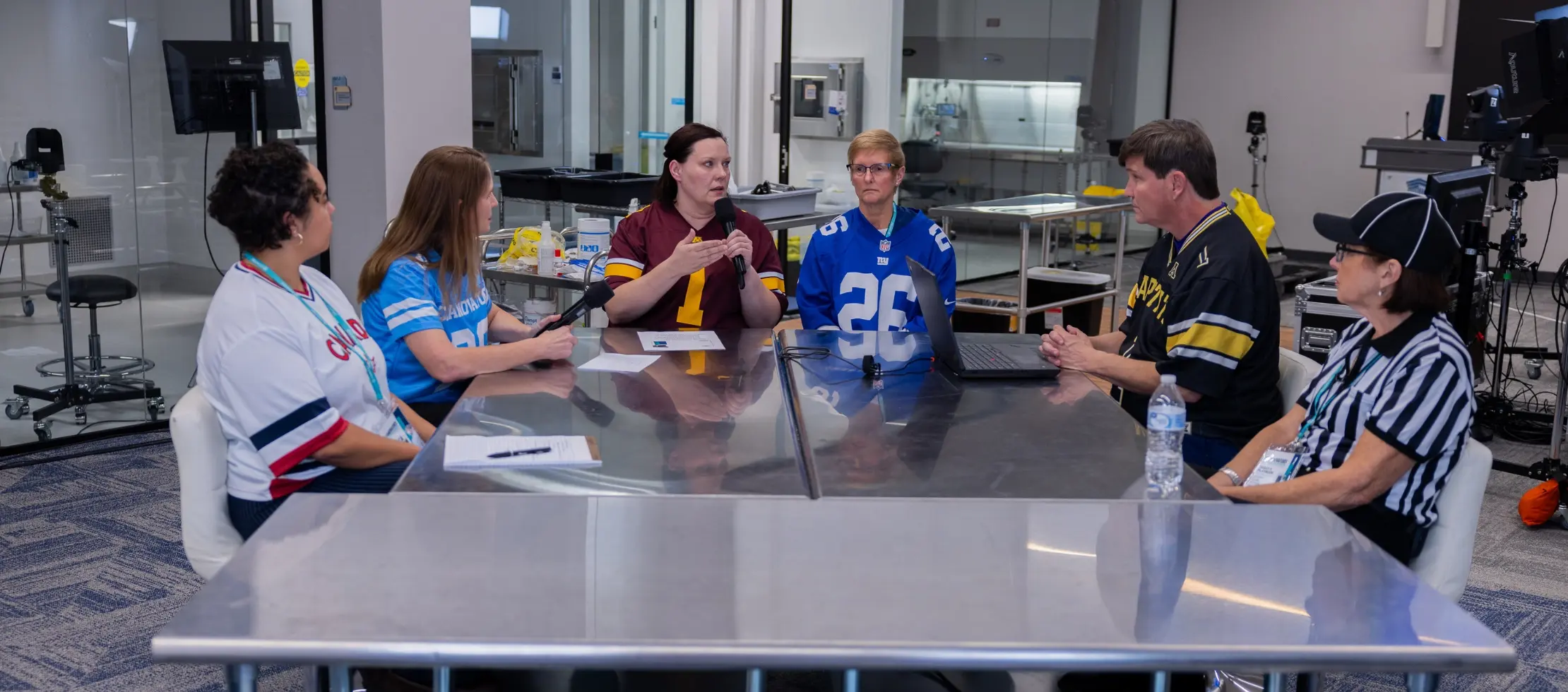
The Cleanovators panel answers audience questions about applying sterile compounding fundamentals in everyday work. Moderated by Michael Myers, the discussion brings together the event's coaches and referee, with an additional audience contribution on certification considerations. Topics include environmental monitoring trends, transitions between hazardous and nonhazardous work, cleaning access, first air, training, and quality culture.
The panel also explores questions where equipment design, facility procedures, risk assessment, and professional judgment matter. This recording includes the event's closing acknowledgments.
Key Takeaways
-
Use defined procedures for task transitions and exposure controls.
-
Interpret environmental findings in context.
-
Review equipment access and respiratory protection for the specific task.
-
Combine observation, investigation, and respectful feedback.
Featured Presenters
Rebecca Morrison
Microbiology Supervisor at Baxter International Inc.
Jennifer Munoz
RPh, BCSCP, PIC
Clinical Pharmacist and Sterile Compounding Specialist at UNC Homecare Specialists

Jean Meyer
Sterile Compounding Specialist

Karen Spano
R.Ph.
Pharmacy Educator at Accreditation Commission for Health Care (ACHC)

Michael Myers
Clinical Support Manager at Contec Healthcare

Kate Douglass
Consultant to Contec Healthcare
Webinar Section Summaries
Glove Hygiene, Hazardous Transitions, and Footwear
Defined procedures help personnel move between tasks without losing necessary contamination and exposure controls:
- Address sterile IPA before PEC re-entry and after potentially contaminating contact.
- Distinguish outer hazardous-glove removal inside the containment PEC from exposing bare skin.
- Plan transitions between hazardous and nonhazardous work, including urgent requests.
- Evaluate dedicated footwear for cleaning, storage, condition, protection, and comfort.
Environmental Trends and Contamination Pathways
Counts, organism patterns, and historical data help identify changing conditions and possible contamination routes:
- Consider investigation before an action-level exceedance when trends deteriorate.
- Review persistent zero results without assuming room sterility or sampling failure.
- Evaluate transfer practices, garbing, staging carts, sinks, and water use.
For Bacillus surface findings, review agents, package edges, contact time, and observed handling.
Cleaning Access and Respiratory Hazards
Access around containment equipment requires attention to equipment performance, positioning, and personnel exposure:
- Distinguish temporary cleaning access from equipment relocation.
- Consider casters, mechanical disturbance, positioning, and inspection needs.
- Confirm the approach with equipment instructions, certifiers, and applicable authorities.
Use task-specific expert review to select respiratory protection for cleaning activities.
First Air, Sharps Practices, and Competency
Observed behavior remains central to aseptic technique and injury prevention:
- Use smoke visualization and recorded mock manipulations to identify first-air interruptions.
- Review sharps disposal and one-handed technique training.
- Do not use experience or past injury rates to justify two-handed needle recapping.
- Assess observed garbing technique alongside microbiological results.
Excursion Response and Quality Culture
Investigation and respectful feedback support sustained improvement:
- Investigate causes rather than automatically repeating a “triple clean.”
- Distinguish routine excursion response from new-facility or construction-related cleaning.
- Use peer correction to reinforce attentive, patient-focused practice.
- Plan competency demonstrations appropriately; consecutive successful demonstrations need not all occur on one day.
More from Studio 289
Behind the Scenes
Featured products
Unable to load products.