The appropriate frequency and sequence depend on the work performed, spills or other events, product instructions, and the facility’s written procedures.
Reusable tools and equipment
Powders, creams, and sticky residues can remain on mortar and pestles, beakers, graduated cylinders, and molds.
The cleaning process should begin while the tool remains inside the containment enclosure:
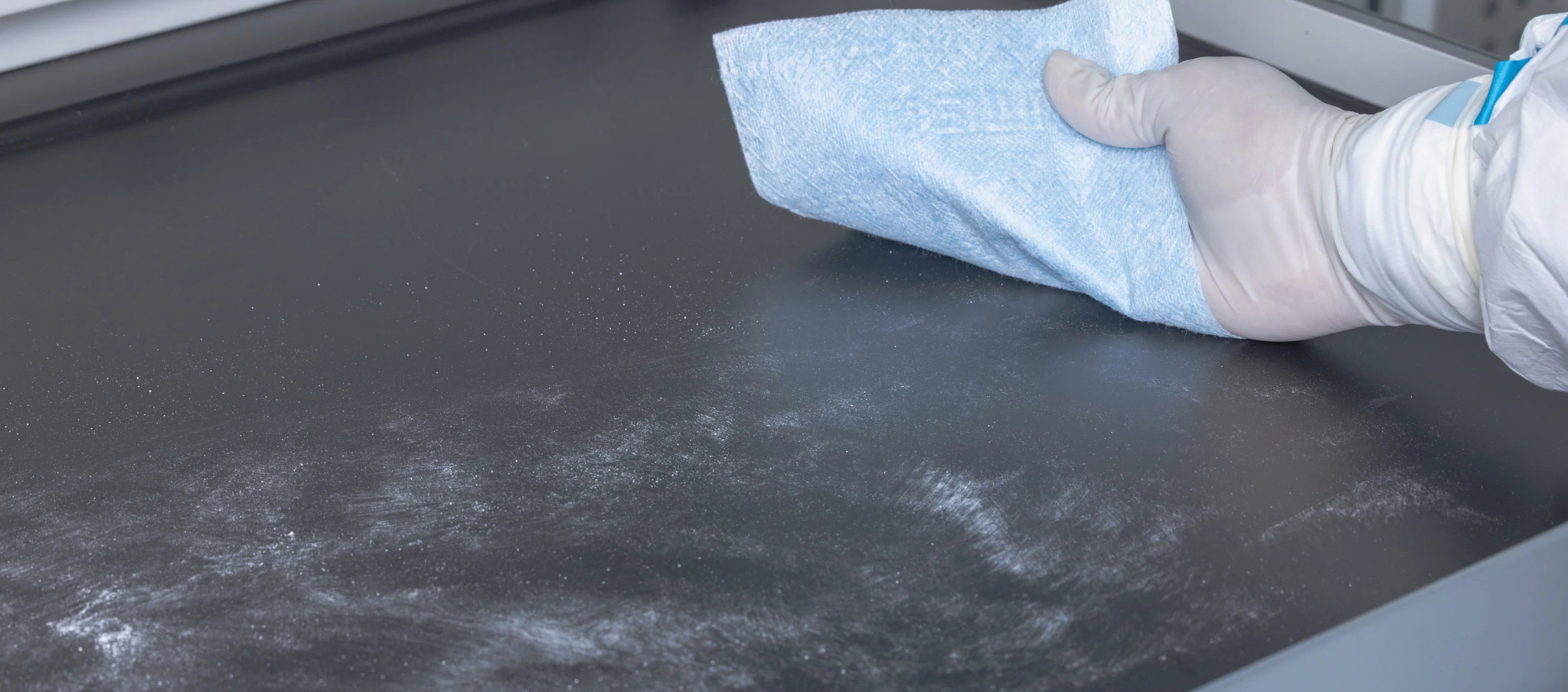
- Remove as much visible residue as possible with suitable wipes.
- Make two passes with the selected decontamination agent before removing the tool from the enclosure.
- Wash thoroughly at the sink with hot water and soap, paying attention to crevices.
- Rinse with tap water, then perform a final rinse with purified, reverse osmosis, or distilled water. Dry the tool before storage.
Melanie describes the two-pass sequence as a practice developed through consultation with other professionals, rather than a procedure quoted directly from a standard. She also recommends disposable tools where feasible and dedicating reusable tools and molds to the hazardous drug work for which they are used. In particular, she urges facilities to keep tools used for hormones separate from tools used for other hazardous drugs.
Cleaning product selection
A product should be selected for the specific task and the materials it will contact. Kedar encourages facilities to review residue-removal evidence, microbial efficacy where disinfection is required, contact time, and compatibility with existing equipment. He notes that some oxidizing chemistries may damage certain materials. Melanie also advises checking sinks and plumbing for compatibility and avoiding prolonged contact between decontamination agents and plumbing components.
Facilities performing both sterile and nonsterile compounding should evaluate each intended use separately, including whether a product is supplied in a suitable form for that environment.
Worker protection and hormones
Melanie emphasizes that compounding with hormones requires the same deliberate attention to worker exposure as other hazardous drug work. Powders can present inhalation concerns, while creams may create skin-contact exposure. Repeated work over time makes the choice of engineering controls, procedures, and personal protective equipment especially important.
Kedar discusses testing of protective gowns against a cream-based hormone mixture. His central point is to examine the available test data for the substances and conditions relevant to a facility, rather than assume a gown or glove offers the same protection against every hazardous drug. Facilities should review the complete product data when selecting apparel.
Shared compounding spaces and risk assessment
The speakers discuss the possibility of using a sterile hazardous compounding space for occasional nonsterile hazardous work. Melanie stresses that “occasional” requires careful, facility-specific interpretation. If the activity becomes routine, a facility may need to reconsider its space and equipment. Before returning to sterile compounding, the shared enclosure and environment require a thorough decontamination, cleaning, and disinfection process under the applicable requirements and facility procedures.
Questions about individual drugs, beyond-use dates, and assessments of risk cannot be resolved through a single general rule. Melanie explains that these decisions depend on the preparation, the facility, its controls, and supporting information such as testing.
Hazardous drug surface sampling
Wipe sampling can help a facility identify hazardous drug residue on work surfaces and surrounding areas, including residue associated with some hormones. Melanie encourages facilities to review results over time, investigate elevated findings, and use the findings to improve cleaning procedures and other controls. Sampling complements a consistent cleaning process; it does not replace one.
 Contec Healthcare
 Compounding Pharmacy, USP, Compliance, Webinar



 return to overview
 back to top