Preparation Before Cleanroom Entry
Personnel preparation helps reduce particles and microorganisms introduced into controlled areas:
• Remove outdoor garments and makeup, clean glasses, and check fingernails.
• Address facility clothing requirements before garbing.
• Coordinate hair and facial-hair coverage, mask fit, and shoe covers with the line of demarcation.
Hand Hygiene and Gown Coverage
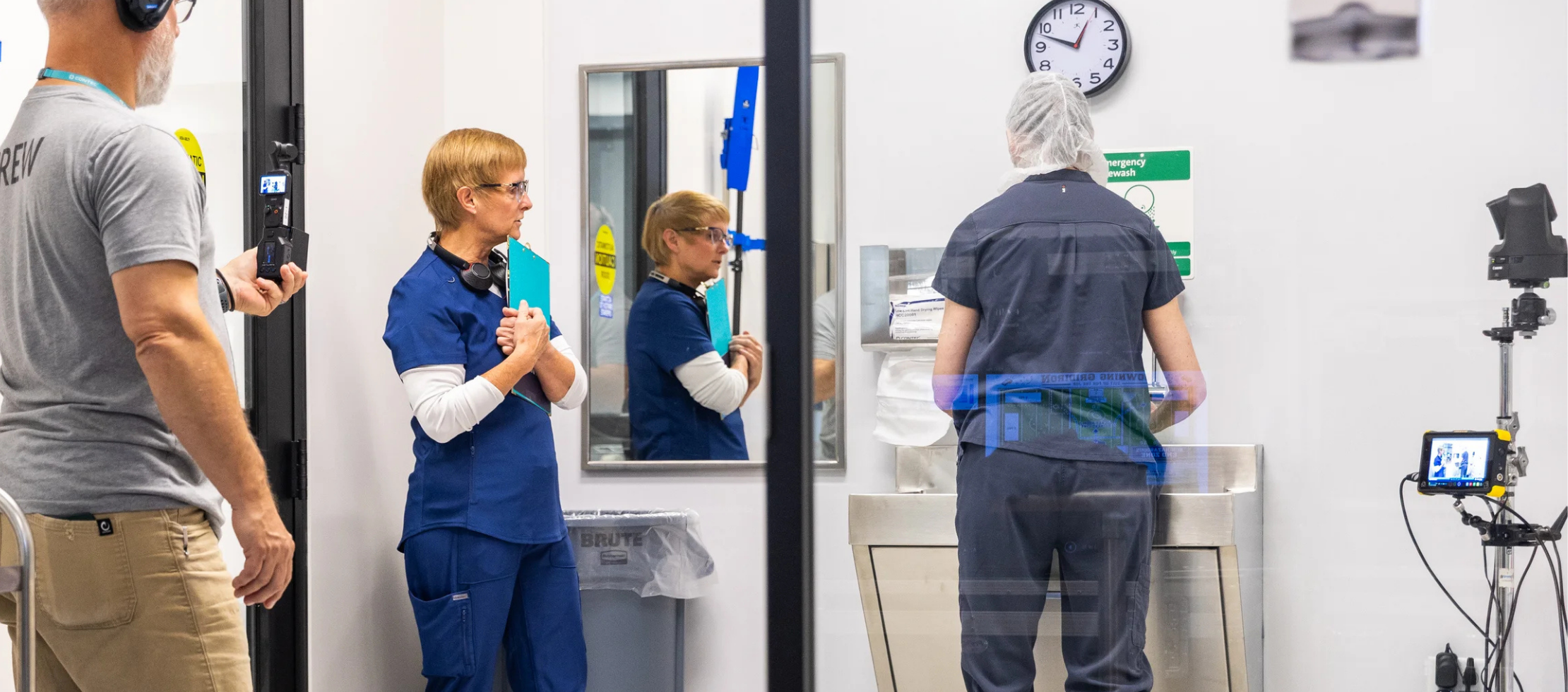
The sequence of hand hygiene and garbing depends partly on sink location and facility layout.
For proper hand hygiene and gown coverage, make sure to:
- Clean beneath nails, wash hands and forearms, rinse toward the elbows, and dry carefully.
- Use training aids to identify missed areas.
- Select low-lint gowns with suitable sleeves, cuffs, and closures.
- Check coverage with a mirror and position thumb loops after hand sanitizer dries.
Sterile Gloves and Competency Assessment
Glove handling must preserve surface cleanliness while maintaining sleeve coverage and dexterity:
- Allow hand sanitizer to dry naturally before donning sterile, powder-free gloves.
- Check fit and inspect for holes, tears, or punctures.
- Replace gloves compromised by contact with nonsterile surfaces.
- Distinguish glove disinfection before PEC entry from garbing competency sampling performed before glove disinfection.
Protective Equipment for Hazardous Tasks
Hazardous drug protection depends on the task and exposure hazards.
A single layering arrangement does not suit every activity:
- Evaluate gown materials, seams, closures, cuffs, and respiratory protection needs.
- Coordinate chemotherapy-glove layers, gown cuffs, and thumb loops.
- Use sterile outer gloves where applicable.
- Allow sterile isopropyl alcohol to air-dry after outer-glove disinfection.
Doffing and Permitted Gown Reuse
Controlled removal helps limit contamination and hazardous drug residue transfer:
- Follow a defined nonhazardous doffing sequence.
- Use protected storage for any permitted same-person gown reuse.
- Remove outer hazardous gloves inside the containment primary engineering control.
Fold contaminated gown surfaces inward and complete the remaining doffing and handwashing sequence without rushing.
 Contec Healthcare
 Compounding Pharmacy, Cleanroom Apparel, Cleanovators, Webinar


 return to overview
 back to top