Defining Hazardous Drugs
The session begins by defining hazardous drugs using NIOSH criteria. Rather than listing individual drugs, the presenter explains that NIOSH maintains and updates the official hazardous drug list.
Hazardous drugs are classified based on toxicological endpoints, including:
- Antineoplastic (chemotherapy) agents
- Other drugs with reproductive, organ toxicity, or other hazardous effects
Understanding what qualifies as a hazardous drug is foundational to implementing proper containment and decontamination procedures.
NIOSH Hazardous Drug Lists and Drug Classification
The transcript discusses updates to the NIOSH hazardous drug list:
- The 2016 list, updated in 2018, included 239 drugs grouped by hazard type.
- A 2020 draft revision reorganized drugs into updated groupings and made additions and removals.
The grouping structure helps facilities determine handling and containment requirements based on drug category, especially for antineoplastics versus other hazardous agents.
Overview of USP <800> Requirements
USP <800> establishes standards for safe handling of hazardous drugs to protect healthcare personnel, patients, and the environment.
The discussion emphasizes:
- Containment strategies
- Environmental controls
- Cleaning and decontamination requirements
- Surface contamination prevention
USP <800> shifts focus beyond sterile compounding technique to occupational exposure prevention and surface residue control.
Hazardous Drug Residue: Why Decontamination Matters
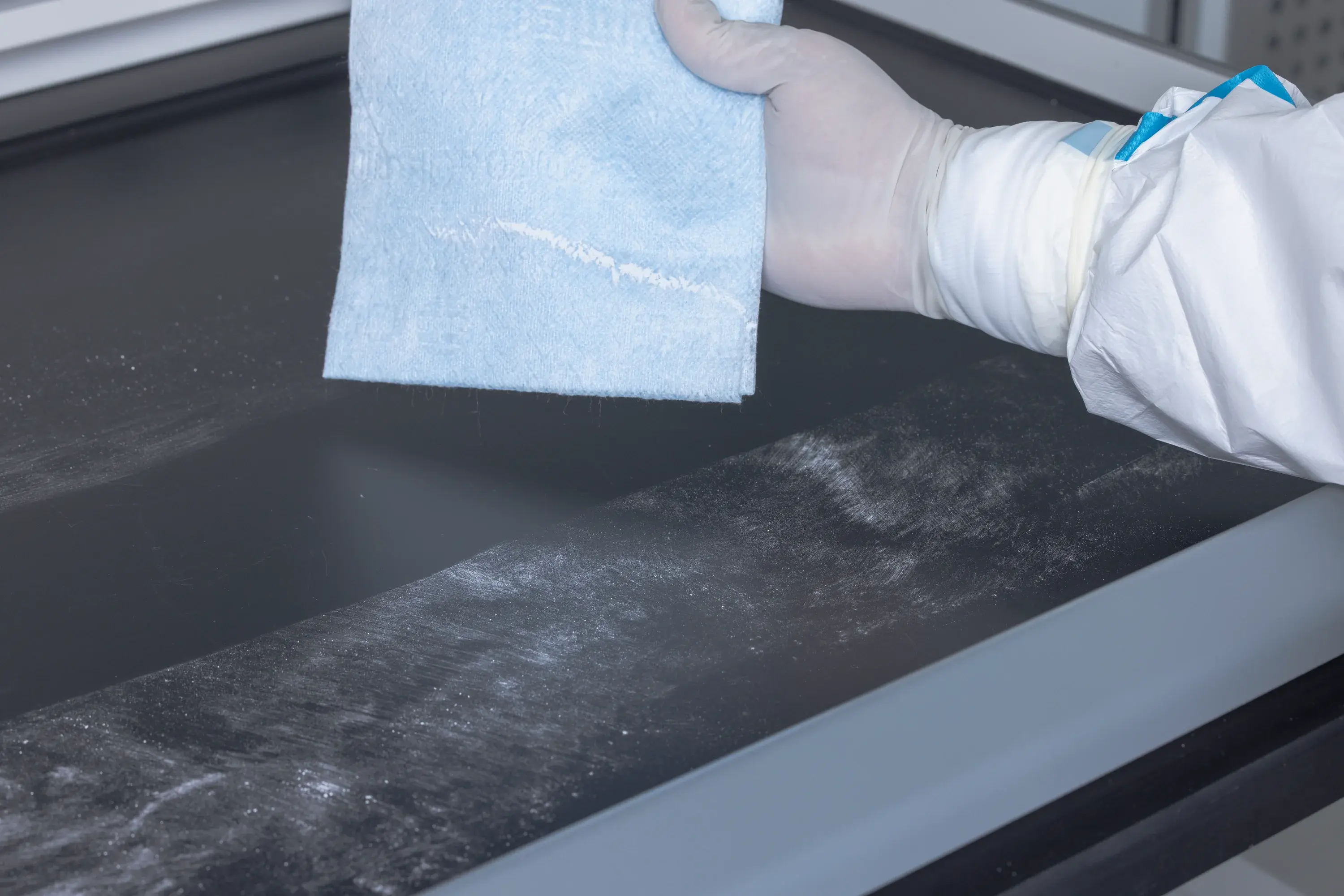
Hazardous drug residue can remain on surfaces in compounding and administration areas.
This residue poses risk of:
- Occupational exposure
- Cross-contamination
- Environmental spread
The webinar highlights that residue is not always visible and may persist if not properly removed or chemically deactivated.
The presence of residue makes decontamination a critical step—not merely routine cleaning.
Cleaning vs. Decontamination vs. Disinfection
A key educational component is clarifying terminology:
- Cleaning: Physical removal of contamination.
- Decontamination: Chemical inactivation or neutralization of hazardous drug residue.
- Disinfection: Elimination of microorganisms.
These are distinct processes with different goals. USP <800> requires decontamination of hazardous drug areas, not just cleaning or disinfection.
Understanding these differences prevents procedural gaps.
Selecting Appropriate Decontamination Agents
The transcript discusses considerations when selecting decontamination chemistries:
- Compatibility with hazardous drugs
- Ability to chemically deactivate or remove residue
- Suitability for cleanroom environments
- Material compatibility
Facilities must ensure their chosen products are appropriate for hazardous drug residue—not simply general-purpose disinfectants.
Practical Implementation Challenges in HD Areas
Moving from written policy to real-world execution presents challenges, including:
- Workflow integration
- Staff training
- Frequency and timing of decontamination
- Surface complexity and equipment design
The presenters stress that decontamination must be systematic and consistent to be effective.
Environmental Monitoring and Residue Control
The discussion touches on environmental monitoring and contamination control strategies in hazardous drug areas.
Monitoring surface contamination can help facilities:
- Evaluate effectiveness of cleaning and decontamination practices
- Identify contamination trends
- Improve procedural compliance
Residue control is an ongoing process rather than a one-time compliance measure.
Moving from Regulatory Theory to Practical Application
The core theme of the webinar is implementation. While USP <800> provides regulatory direction, facilities must translate those standards into:
- Clear procedures
- Appropriate product selection
- Staff education
- Defined documentation practices
The emphasis is on making compliance operational and sustainable, rather than theoretical.
 Contec Healthcare
 Compounding Pharmacy, Webinar







 return to overview
 back to top